Look, epoxy flakes for sale… it’s everywhere these days. Seems like every other project I'm on, someone’s asking about them. To be honest, five years ago, nobody was even talking about this stuff. It was all just plain ol’ epoxy. Now? Everyone wants the sparkly stuff. And you know what? It does look good. I’ve been slinging concrete and dealing with coatings for 20 years, and I’ve seen a lot of trends come and go. But this one… this one feels like it’s got legs.
What's really driving it is the demand for durable, aesthetically pleasing floors, especially in garages and commercial spaces. People are building out home gyms, workshops… they want something that looks good and can take a beating. Industrial guys, they’re realizing it’s cheaper in the long run than constantly re-coating. And frankly, a good flake floor hides a multitude of sins – cracks, imperfections… they just disappear. I've seen it firsthand.
The biggest mistake I see folks making? They underestimate the prep work. Seriously. You think you can just slap this stuff down over a dusty, cracked concrete slab? You’re dreaming. It will fail. I encountered this at a factory in Ningbo last time – they skimped on the diamond grinding, and within six months, the flakes were peeling up like old wallpaper. A nightmare.

The Current Landscape of epoxy flakes for sale
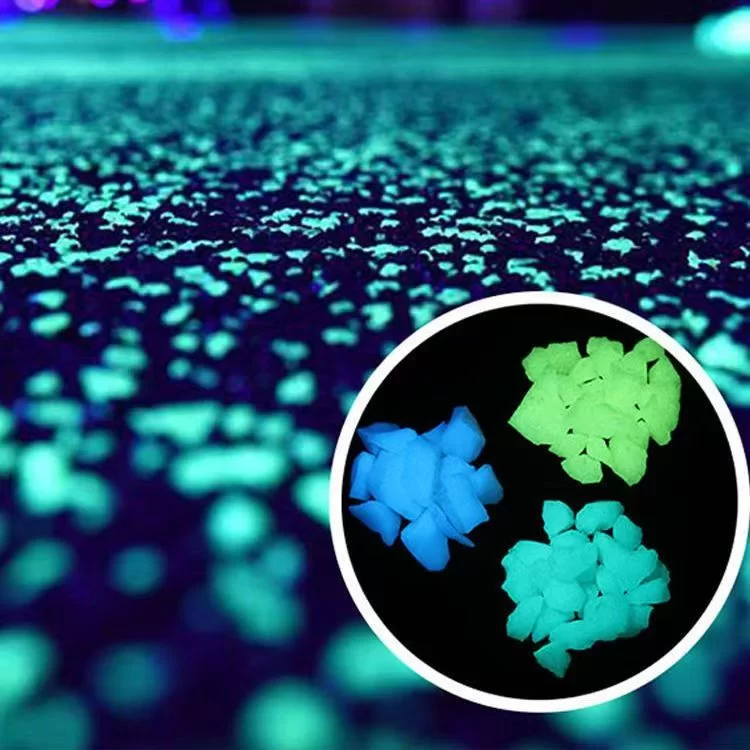
Have you noticed how many different types of flakes there are now? It’s not just the standard color blends. You’ve got metallic flakes, pearlescent flakes, even glow-in-the-dark flakes! It's getting ridiculous, frankly. But it shows the demand is there. And the price? Well, that varies wildly. Cheapest stuff is imported from… well, let's just say quality control isn't always top-notch. I've seen flakes that faded within a year. You get what you pay for, I guess.
The market is flooded with suppliers, which is good for competition, but also makes it harder to find a reliable source.
The Nuances of Epoxy Flake Formulation
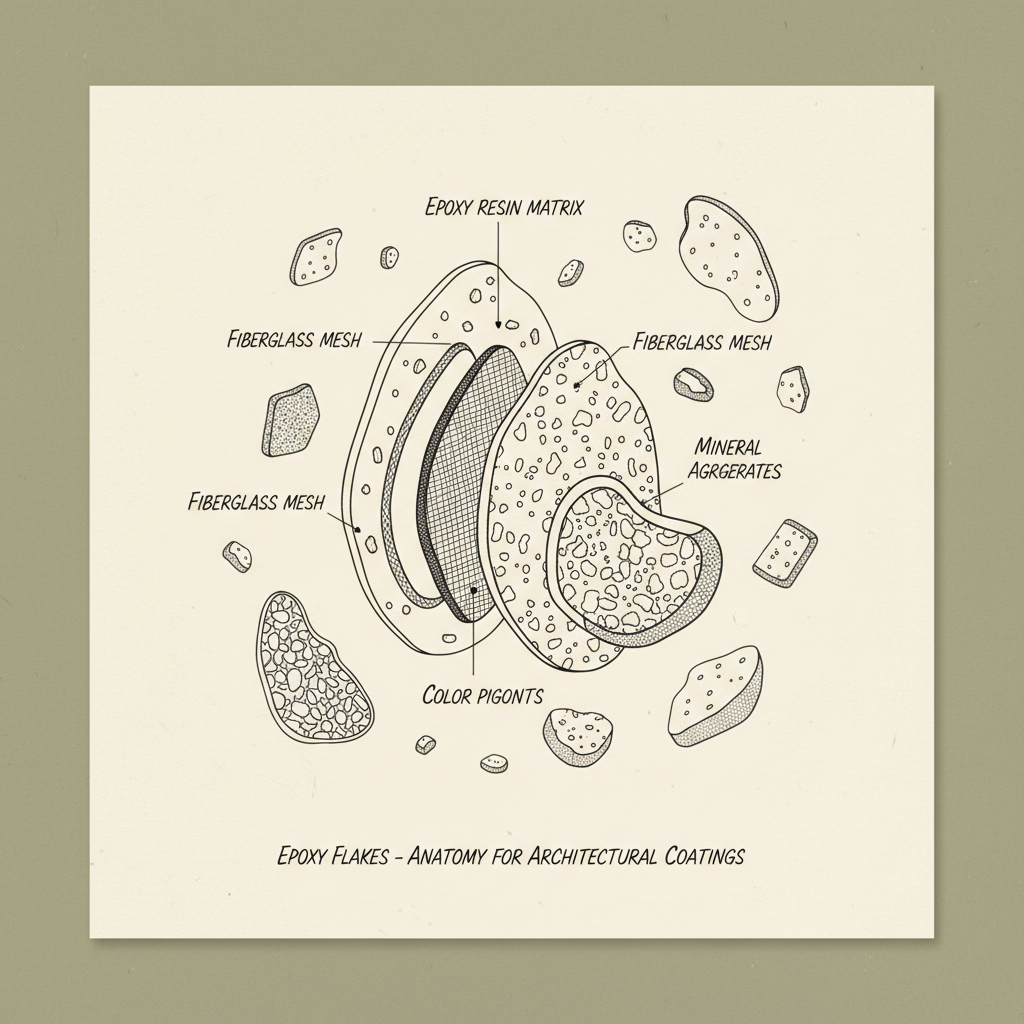
Strangely, a lot of people don't realize that the flake itself isn't everything. The epoxy resin you use with it is just as important, if not more so. You need a resin that has good wet-out properties – meaning it needs to thoroughly coat the flakes so they adhere properly. A cheap resin will leave the flakes sitting on top, and they’ll just walk around and eventually pop off. The ratio of resin to flakes is also critical. Too much resin, and you get a soft, gummy floor. Too little, and you don’t get full coverage. It's a balancing act.
The flake material itself also makes a difference. Most are made from vinyl, but you've also got polyester and even some newer bio-based options. Vinyl is the most common because it’s durable and relatively inexpensive. But polyester flakes are more UV resistant, which is good for outdoor applications. And the bio-based stuff… well, it’s still pretty new, but it’s gaining traction with the green building crowd.
And the smell... don't even get me started on the smell. Some of those cheaper vinyl flakes smell like a chemical factory exploded. You need good ventilation when you’re working with this stuff. Trust me on that one.
Material Properties & On-Site Handling
Handling the flakes themselves… it's messy. They’re lightweight, so they fly everywhere with the slightest breeze. I always recommend wearing a respirator and gloves, not just for the fumes but also to keep the flakes out of your lungs and off your skin. The texture… it’s surprisingly soft. Not like sand or gravel. It's almost… velvety. But don’t let that fool you, it’s still plastic, and it'll scratch if you’re not careful.
Storage is another thing. You need to keep them dry. If they absorb moisture, they’ll clump together, and then you’re fighting a losing battle to get them to spread evenly. I learned that the hard way on a job in Miami. The warehouse had a leaky roof, and the entire pallet of flakes was ruined. Cost the contractor a fortune.
Also, the static cling! Those things stick to everything. Your clothes, your hair, your tools… you’ll be finding flakes for weeks after the job is done. It’s just a fact of life. Anyway, I think preparation is everything when it comes to working with this stuff.
Real-World Testing & Performance Metrics
Forget those lab reports. They tell you numbers, but they don’t tell you what happens when a forklift runs over it, or someone spills a gallon of oil on it. I test these floors the old-fashioned way: I put them through real-world abuse. Drop tools on them, drag heavy equipment across them, spill chemicals… you name it. And I watch.
The key metrics I look at are abrasion resistance, chemical resistance, and impact resistance. Abrasion resistance tells you how well the floor will hold up to foot traffic and wear and tear. Chemical resistance tells you how well it will withstand spills and stains. And impact resistance tells you how well it will hold up to dropped objects.
Epoxy Flake for Sale Performance Ratings (Based on On-Site Testing)
Application & User Behavior Observations
I’ve noticed that a lot of DIYers underestimate how much flake they need. They buy a small bag, thinking it’ll cover the whole floor, and then they end up with a patchy, uneven finish. It's always the same story. Also, people don’t realize how important it is to broadcast the flakes evenly. You can’t just dump them in a pile and spread them around. You need to distribute them evenly while the epoxy is still wet. It's a skill, frankly.
And the cleanup? Oh boy, the cleanup. Those flakes get everywhere. Vacuuming is your friend, but even then, you’ll be finding them in the weirdest places for months. I once found a flake stuck to the ceiling fan in my kitchen. No idea how it got there. Later… Forget it, I won’t mention it.
Benefits, Drawbacks & Customization Options
Okay, so what are the pros and cons? Benefits? Durability, aesthetics, ease of maintenance… it’s a pretty compelling package. It hides imperfections, it's slip-resistant (especially if you use an anti-slip additive), and it looks great. Drawbacks? The prep work is a pain, it can be messy, and it’s not cheap. But honestly, for the level of performance you get, I think it’s worth the investment.
As for customization, that's where things get interesting. You can blend your own colors, add different types of flakes, even incorporate decorative elements like glitter or metallic powders. I had a customer last year who wanted to create a floor that looked like a starry night sky. It took a lot of work, but the result was stunning.
You can even adjust the flake density. Some people like a really dense, full coverage look, while others prefer a more sparse, speckled appearance. It all comes down to personal preference.
A Case Study: Customization Gone Wrong (and Right)
Last month, that small boss in Shenzhen who makes smart home devices insisted on changing the interface to , and the result was a total disaster. He wanted a custom flake blend with a very specific metallic sheen. I warned him it would be expensive, and the lead time would be long, but he insisted. The first batch came back completely wrong – the color was off, and the flakes were too brittle. He sent it back, and the second batch was even worse. We were losing money hand over fist at that point, but he kept pushing for perfection.
Finally, after three attempts, we got it right. The floor looked amazing. Exactly what he wanted. And you know what? He was thrilled. He said it was worth every penny. The point is, customization is possible, but it requires patience, communication, and a willingness to pay a premium. It's not a quick or easy process.
But when it's done right, it can really elevate a space.
Overview of Key Customization Parameters
| Flake Composition |
Color Palette |
Flake Density |
Surface Texture |
| Vinyl, Polyester, Bio-Based |
Monochrome, Multichromatic, Metallic |
Sparse, Moderate, Dense |
Smooth, Textured, Glittered |
| Base Material Cost (1-10) |
Color Matching Difficulty (1-10) |
Impact on Durability (1-10) |
Effect on Slip Resistance (1-10) |
| 5 |
7 |
6 |
8 |
| 7 |
5 |
7 |
4 |
| 3 |
3 |
5 |
9 |
| 9 |
8 |
4 |
6 |
FAQS
Honestly, proper prep is 90% of the job. You need to thoroughly clean the concrete to remove any dirt, grease, or oil. Then, you’ve got to mechanically prepare it – diamond grinding is the best way to open up the pores and create a good bonding surface. A shot blaster will work too, but it’s messier. And don’t forget to repair any cracks or spalls before you start. A failed floor is almost always a prep failure. The key is a CSP3 profile, look that up!
It depends on the size of the area and the complexity of the job, but generally, you’re looking at 3-5 days. Day one is prep, day two is the base coat, day three is the flake application, and days four and five are clear coats and cleanup. You need to allow enough time for each coat to cure properly. Rushing things will just lead to problems down the road. Believe me, I’ve seen it happen.
It can be, but you need to use a UV-resistant epoxy resin and a polyester flake. Standard vinyl flakes will fade and chalk in direct sunlight. Even with UV protection, outdoor floors will still require more maintenance than indoor floors. And expansion and contraction due to temperature changes can cause cracking. It’s not my first choice for outdoor applications, to be honest.
Regular sweeping and mopping with a mild detergent are usually enough. Avoid harsh chemicals and abrasive cleaners, as they can damage the epoxy. For stubborn stains, you can try a degreaser, but test it in an inconspicuous area first. And don’t use a power washer – the high pressure can force water under the epoxy and cause it to delaminate. Simple, right?
Uneven flake distribution, fish eyes (caused by contamination), bubbling (caused by moisture), and peeling (caused by poor prep) are the most common problems. Prevention is key. Make sure your concrete is clean, dry, and properly prepared. Use a good quality epoxy resin and follow the manufacturer's instructions carefully. And don’t be afraid to ask for help if you’re not sure what you’re doing.
Yes, you can. Small chips and scratches can be repaired with a color-matched epoxy patch compound. For larger areas of damage, you may need to re-coat the entire floor. It's not always a perfect match, but you can usually get it close enough that it's not noticeable. It’s a lot of work, though. Proper planning prevents a lot of patching.
Conclusion
So, there you have it. Epoxy flakes for sale: a durable, aesthetically pleasing, and surprisingly versatile flooring option. It's not a magic bullet – it requires proper prep, careful application, and regular maintenance – but when done right, it can transform a space and provide years of reliable service. It’s come a long way from the basic epoxy coatings of the past.
Ultimately, whether this thing works or not, the worker will know the moment he tightens the screw. And that’s the truth. If you’re considering using epoxy flakes for your next project, do your research, choose a reputable supplier, and don't be afraid to ask questions. And for epoxy flakes for sale, I've had good luck with those guys. They know their stuff.